No: a parent who loses their strength in a year or two, in their sixties, is not just getting older. There is something else to look for, and it is often up to you to keep track.

Question 1
No. It is not normal, for a 68-year-old man, to be unable to walk 500 metres without sitting down. Today, 68 is relatively young.
Here is what Julien confided to me recently: ‘My father could easily walk 1.6 km. Now he struggles to walk even 500 metres without getting out of breath and needing to sit down to rest.’ When he looks at him, he no longer sees the young, strong man who used to help him solve all his problems.
His sadness is understandable. Yet it rests on an idea I do not share: that it is age, and that nothing can be done about it.
Don't you find it strange that ‘ageing badly’ has become the norm? Loss of independence linked to an illness is not a natural sign of ageing.
Question 2
If he has difficulty getting around, there must be something else: malnutrition, deficiencies. These are leads, not a diagnosis: no one can say, from a distance, what is weakening your father.
The National Solidarity Fund for Autonomy puts it bluntly: ‘Undernutrition is not an inevitable consequence of advancing age.’ Yet it reduces the strength of the muscles, to the point of making walking or getting up difficult. It weakens the body, and increases the risk of losing independence.
In other words, a parent who walks less far than before is not necessarily a parent who is ageing faster. It may be a parent who is missing something. As long as the phrase ‘it's age’ holds, no one looks.
Question 3
Because deficiencies cannot always be seen. They can worsen existing health problems without anyone detecting them.
Make sure your parent can have regular blood tests, without waiting for someone to suggest it. It is the simplest way to look for what they are missing.
Once you have the results in hand, photograph them with your smartphone. A free artificial intelligence can interpret them, and help you prepare your questions for the next appointment. Simply ask it what falls outside the usual ranges, and what it would be useful to ask.
You no longer arrive empty-handed: you know what you want to understand, and what you are going to ask.
Then keep these results in a single file, with the prescriptions and the reports. You find them at the right moment, and a recent test can be shared with another specialist, which avoids duplicate tests.
Question 4
No, and this is where many people stop. People tend to think that, because they have seen the doctor, they have done what needed to be done.
Yet taking care of your parent means accepting responsibility for their health. Becoming the conductor, the investigator of what they have, what they feel, what they are going through.
A specialist, however competent and reassuring, cannot cover every aspect of their health alone. You see what the specialist does not: the tiredness after a series of appointments, the falling appetite, the changing mood.
It also means being their voice, when they do not dare say what they feel, or when they forget an important detail. You are not there to replace anyone, but so that everyone has the right information at the right time. By keeping this overall view, you become the link that protects your parent and supports their equilibrium.
Also have them supported by competent people. They need support, to understand what is weakening them.
Question 5
With a few lines, regularly, on two levels: what their body is going through, and what they feel.
- Their body: the distance they walk, their breathing, their appetite, their tiredness, their mobility.
- Their emotions: their mood, what they feel, what they do not always dare to say. Perhaps a therapist could help them.
- After each appointment: two or three lines, what was said, what needs to be done, the next step.
- Their blood tests, with the questions you have prepared.
What they feel is not a detail. Unpleasant emotions and feelings, even invisible ones, weigh on their health.
Also keep a short health summary up to date: their current treatments, their allergies, their significant medical history. And before each appointment, prepare one or two questions, so as not to forget anything.
Coordinating does not mean managing everything: it means ensuring consistency. There is nothing complicated or technical about this role: it is learned naturally, step by step. The conductor is you: you get organised, you listen, you seek several opinions. It can take a lot of energy at first, but it is easier when you have a plan.
Your father, for his part, remains free to accept or refuse what you suggest. The logbook decides nothing in his place: it helps you see.
Question 6
At this level, taking care of your father means taking care of yourself, and preparing for your own ageing. Tomorrow, no one will do this work for us. So you might as well get into the habit today.
Everyone wants to age well, but no one knows how to prepare for it. Supporting your parent is a valuable way to lay the foundations for a peaceful and serene later life, for yourself.
And if you do not realise that it is absolutely not normal to be weakened in your sixties, how can you expect to take care of yourself?
What this does not do: the logbook does not find the cause for you, and it cures nothing. It takes time, courage, energy, humility, patience. You have to be ready for disappointments, sometimes for conflicts.
No need to be perfect: you just need the right mindset.
The most concrete gesture, starting today: open a notebook in their name. Write three lines in it: the distance they walked this week, their appetite, their mood. Then check the date of their last blood test.
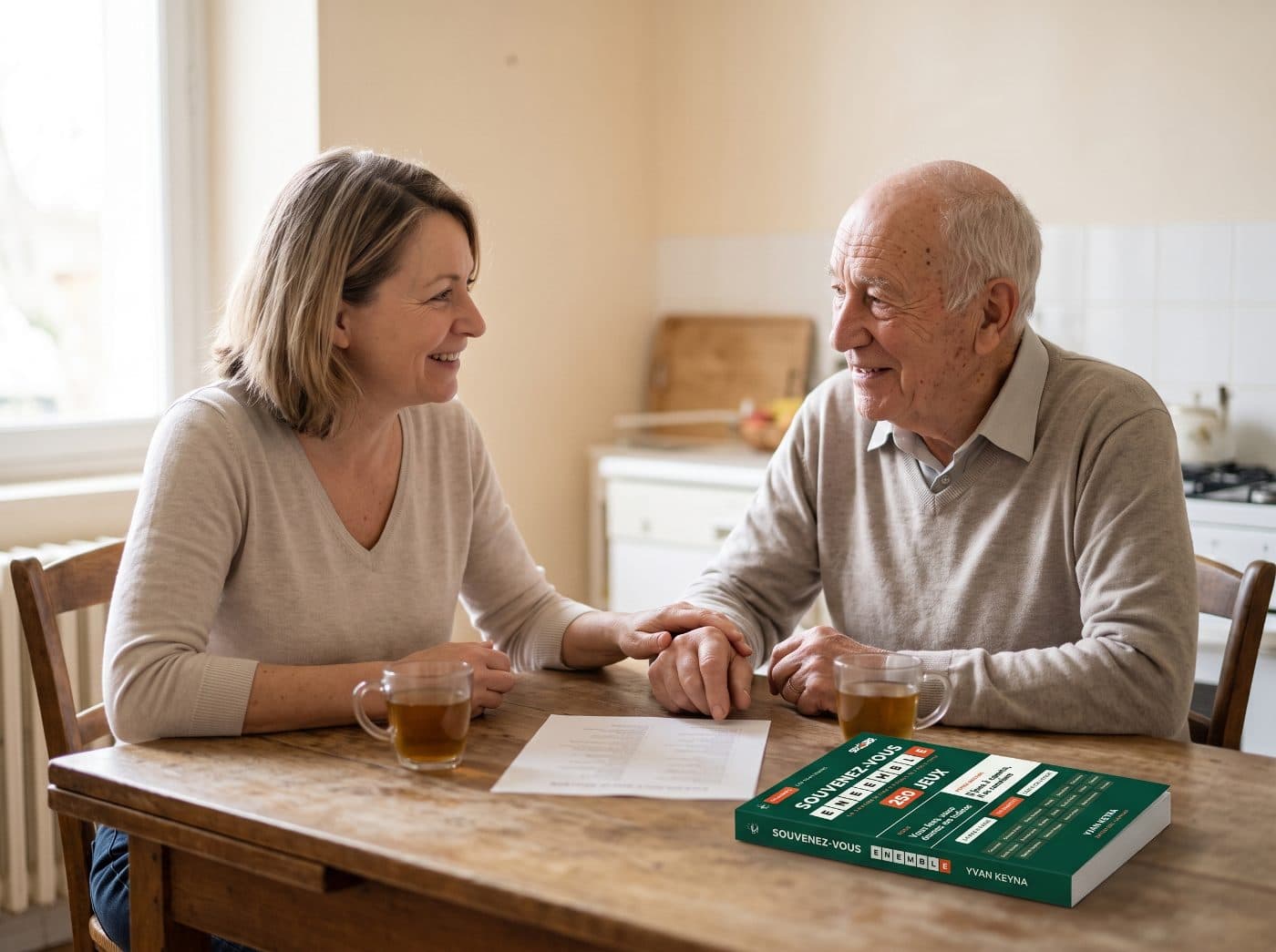
This is a chapter I cover in my book 👉 Help! Who's Going to Take Care of My Parents?, whose aim is to give you this plan, to keep track of your parent's health without wearing yourself out. The book has three goals: taking care of your parent, taking care of yourself and your relationships, preparing for your own ageing.
This guide can be useful to your brothers and sisters, or to your other parent: you can pass it on to them, and keep the logbook together.
Would you like to know how to keep your parent's health logbook? Let me know: 👉 contact@help-editions.co.uk
Sources used (10)
| # |
Fact cited |
Link |
| 1 |
‘Ageing badly’ is not the norm: loss of independence linked to an illness is not a natural sign of ageing |
👉 Help! Who's Going to Take Care of My Parents?, Yvan Keyna |
| 2 |
Undernutrition is not an inevitable consequence of advancing age; it reduces muscle strength to the point of making walking or getting up difficult, weakens the body and can lead to a loss of independence |
👉 CNSA, undernutrition in older people: spotting it and preventing it · 👉 CNSA, the consequences of undernutrition for older people |
| 3 |
Deficiencies can worsen existing health problems and are not always detected; regular blood tests, without waiting for them to be suggested |
👉 Help! Who's Going to Take Care of My Parents?, Yvan Keyna |
| 4 |
A free artificial intelligence can interpret a photographed blood test, and help prepare your questions |
👉 Help! Who's Going to Take Care of My Parents?, Yvan Keyna |
| 5 |
A specialist cannot cover every aspect of health alone; the relative sees the tiredness after a series of appointments, the falling appetite; they are their parent's voice, so that everyone has the right information at the right time |
👉 Help! Who's Going to Take Care of My Parents?, Yvan Keyna |
| 6 |
Unpleasant emotions and feelings, even invisible ones, weigh on health |
👉 Help! Who's Going to Take Care of My Parents?, Yvan Keyna |
| 7 |
Noting changes, two or three lines after each appointment, a short health summary, a recent test shared to avoid duplicate tests; coordinating does not mean managing everything, it means ensuring consistency; a role learned step by step |
👉 Help! Who's Going to Take Care of My Parents?, Yvan Keyna |
| 8 |
The parent keeps the right to accept or refuse what is suggested to them |
👉 Help! Who's Going to Take Care of My Parents?, Yvan Keyna |
| 9 |
Everyone wants to age well, but no one knows how to prepare for it; supporting your parent lays the foundations for a serene later life |
👉 Help! Who's Going to Take Care of My Parents?, Yvan Keyna |
| 10 |
The book's three goals: taking care of your parent, of yourself and your relationships, preparing for your own ageing |
👉 Help! Who's Going to Take Care of My Parents?, Yvan Keyna |