Understand29 September 2026
🍋 The real training for ageing happens with your parent
Exercise and diet alone do not prepare you for ageing: the real training happens alongside people who have already grown old.
Read the guide
Your parent refuses to try, and you shout at them to get up. We expect them to change out of love; this guide shows what your suffering says about you.
Yvan Keyna · Published on 22 October 2026
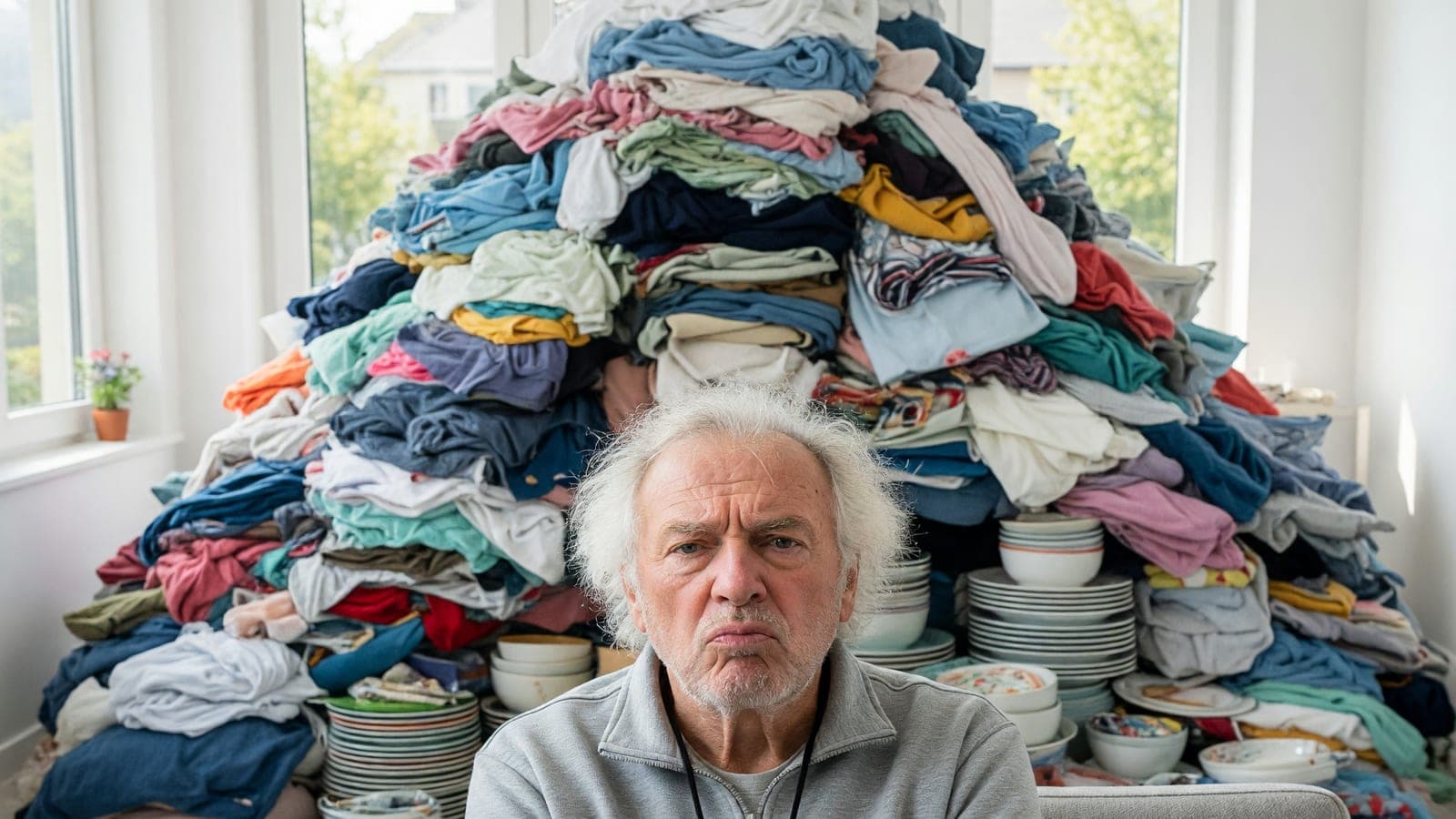
If you suffer disproportionately when your parent refuses to change, it is because a wound is being activated in you, and it has not healed. Your parent is merely the trigger: we cannot demand that they change for our wellbeing.

Question 1
‘Get up. Try.’ That is what Camille shouts at his father, in anger. His father has given up on everything.
He no longer moves. He refuses to try. He is wasting away.
This father was a basketball coach, and an American football player at the highest level. For a third of his life, he repeatedly told Camille to pick himself up alone.
As a child, Camille was given a bag of frozen peas bound tightly in a bandage, and the order to grit his teeth.
Camille speaks harshly about the father he was. No matter, Camille writes: let him try, that is all.
Perhaps you have already let out this cry.
Question 2
Here is the real problem. As in a couple, we would have liked the other person, as a proof of love or through clear-sightedness, to adapt to us so as to satisfy our needs.
And if they do not, then they are a bad parent, a bad partner… They do not love us enough. So, because they do not want to satisfy our needs, we judge them to be selfish.
Looked at this way, it seems obvious: why must the other person change to satisfy my needs?
And that is the problem. We feel bad, helpless. We judge the other person's behaviour to be irrational, and that may be true.
Only, from our point of view and from that of logic, our reasoning stands.
Question 3
The truth is that we cannot demand that the other person changes for our wellbeing, so that we feel better, so that we stop suffering. Even if their reaction, their behaviour, may seem unfair, exaggerated, sometimes even idiotic.
A parent's behaviour can be unhealthy: if they refuse to wash, for instance, or to switch off the television. But if they refuse to change, should they do so out of love for me?
I am not saying that your parent is right, nor that their behaviour poses no danger to themselves or to others.
I am simply saying that what goes on inside us, our emotions, our feelings, is our own business. Demanding that they change because it is brutal for us emotionally is not fair.
We suffer, so they must change? That is one possibility. But there is another path.
Question 4
Your parent would be nothing more than the trigger for what is going on inside you. Their words, their gaze, their behaviour awaken something deep within you. Something that was already there, and that belongs to you.
To ask them to change is to ask the rain to stop because you have forgotten your umbrella.
It is a subject I deal with in the book 👉 Help! Who's Going to Take Care of My Parents?.
The road is demanding, but it sets you free: taking responsibility for your emotions, your feelings, your wounds. Without blaming the other person for them.
This does not wipe out what the parent has done: they bear the responsibility for it. And nothing obliges you to forgive them in order to move on.
Question 5
So what should you do? Understand one vital thing: if we suffer disproportionately (tears, fits of anger, deep sadness…), it is because we have a wound that is being activated and that has not healed.
We have two possibilities:
Within a couple, it is the same thing: asking the other person to change so that we stop suffering means missing an opportunity to heal our wounds.
But to heal your wound, you need a method… We will discuss it in a future guide.
Question 6
In the meantime, a first step, one that asks nothing of your parent.
Next time you cry or lose your temper with them, you can ask yourself a question: is my suffering proportionate?
That is where the small change lies: to stop waiting for your parent to change before you feel better.
What your parent gains: they are no longer judged to be selfish because they are not meeting your needs.
And since it is the same within a couple, this guide may speak to a brother, to a sister, to your partner. You can pass it on to them.
This subject deserves far more than a guide. Would you like us to explore it in more depth together? Tell me: 👉 contact@help-editions.co.uk

Author: Yvan Keyna
| # | Fact cited | Link |
|---|---|---|
| 1 | Camille's message to his father, who has given up on everything | 👉 The post on the Reddit forum r/AgingParents |
| 2 | The book deals with the parent as the trigger and with responsibility for your own wounds | 👉 Help! Who's Going to Take Care of My Parents? |
We cannot demand that the other person changes for our wellbeing, even if their reaction may seem unfair, exaggerated, sometimes even idiotic. What goes on inside us, our emotions, our feelings, is our own business.
If you suffer disproportionately (tears, fits of anger, deep sadness…), it is because a wound is being activated in you and it has not healed. Your parent is merely the trigger.
Two possibilities: keep your distance from your parent, but the wound will be activated on a future occasion; or heal the wound. Next time you are hurting, you can ask yourself a question: is my suffering proportionate?
Exercise and diet alone do not prepare you for ageing: the real training happens alongside people who have already grown old.
Read the guideBehaviour that wears you down is not proof that your parent's personality is changing: international research reads it as a need, a discomfort, a pain.
Read the guideA medicine approved in Germany may be missing from the French register at the same dose: that is not a ban, it is a different legal framework.
Read the guide
Leave your email: the next game comes to you, no need to look for the QR code.