Act22 September 2026
🍋 What your parent can no longer decide, you still can
The years of decision your parent no longer has, you still have: three often-neglected tests, daily movement, a routine rather than a goal.
Read the guide
Instead of looking for one more thing to do for your parent, look for one thing to do with them, meant for someone else.
Yvan Keyna · Published on 13 October 2026
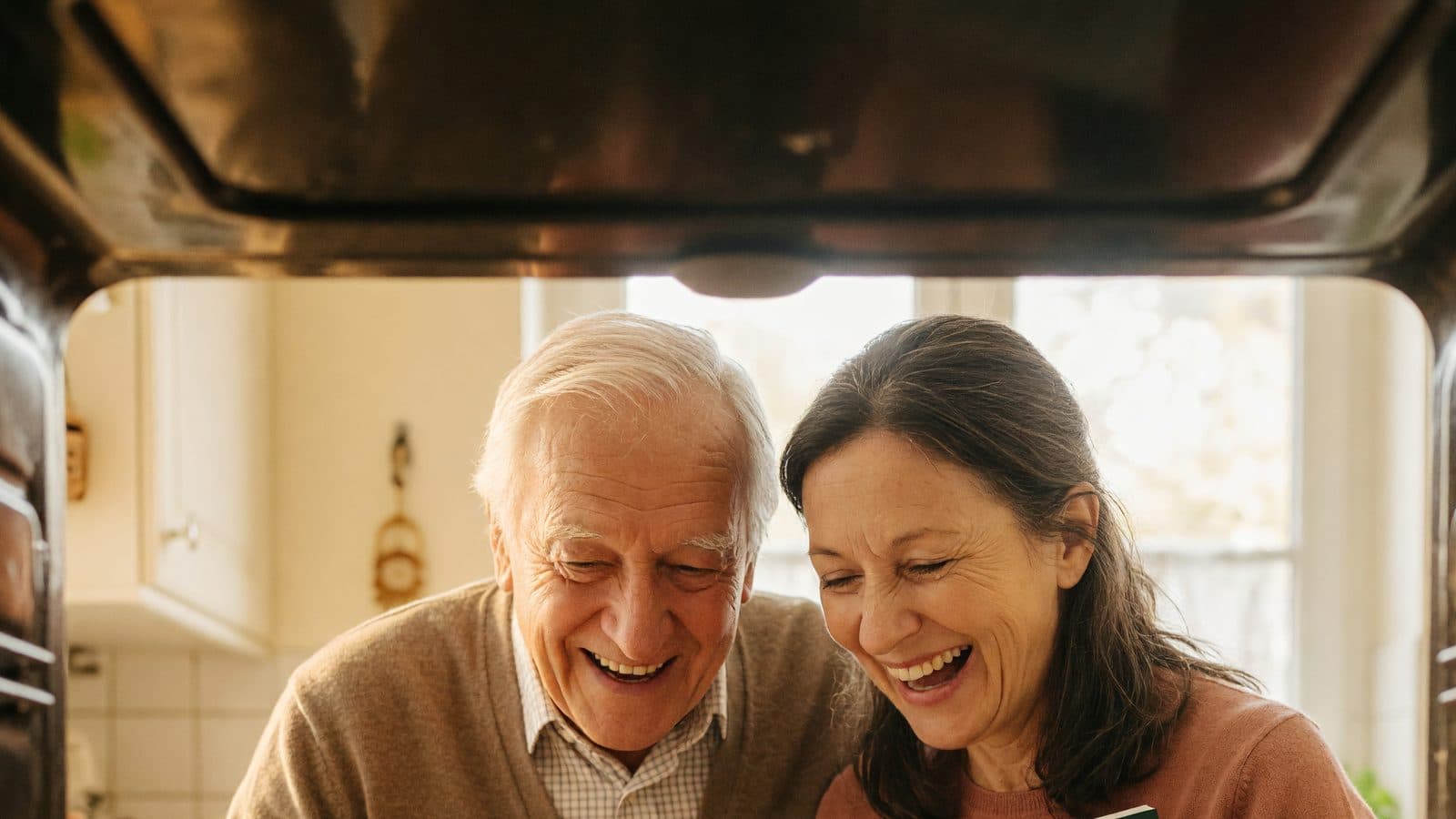
There comes a moment in a family's life when you start doing things in place of your parent rather than with them. No one decides it. It settles in because filling in a form takes two minutes instead of twenty, because carrying the bags is easier than watching someone struggle, because an appointment with the doctor is quicker to book online than by phone.
This shift comes from affection and a lack of time. There is nothing ill-intentioned about it. But it has an effect almost no one sees: by receiving help, a parent gradually stops having chances to be of service. And that is exactly where something closes.
This article suggests a simple reversal. Instead of looking for one more thing to do for your parent, look for one thing to do with them, meant for someone else. This is not a common-sense idea: it is a principle I developed over an entire chapter of Help! Who's Going to Take Care of My Parents?, and it has a name — contributing.

Question 1
Take an ordinary week in a family where the parent lives alone at home and still manages very well. The official post is dealt with by their daughter. The heavy shopping is delivered. The appointment with the consultant was arranged by their son, who also rang the secretary back to move it.
Each of these gestures is useful, free and well-meant. Added together, though, they define a position: in the way the family is organised, your parent has become the one who is looked after. A receiver. Never a giver.
Yet what keeps a person on their feet, at any age, is not being well looked after. It is still having a reason to be expected somewhere by someone. A parent with plenty of people around can feel deeply useless, and there is nothing contradictory about the two.
This is the blind spot of attentive families. You measure what you give. You never measure the chances to give that you take away.
Question 2
The chapter on contributing, in Help! Who's Going to Take Care of My Parents?, opens with a sentence that completely shifts the way you look at things:
“It is no longer just about helping them, but about allowing them to exist through what they share, do or pass on.”
The key word is exist. It is not about keeping your parent busy, or finding them an activity to fill their afternoons. It is about giving them back a role in which someone else depends on what they bring.
The book ties it explicitly to the need for esteem and fulfilment: “at an advanced age, contributing becomes a way to still exist fully”. It is a difference in kind, not in degree. An activity keeps someone busy. A contribution gives them a place.
And the reversal has an immediate practical consequence: it costs nothing to put into practice, because it requires no equipment, no sign-up and no budget. It only requires changing who the gesture is for.
Question 3
The book gives fifteen. Here are five, taken as they are written there, chosen because they are done together and require no special preparation.
First, cook for someone who has nothing. “Offer a meal to a homeless person with your parent: cook together and share a concrete, meaningful act of generosity.” This is probably the strongest of the five, because it draws on a skill your parent often has more of than you do.
Second, transform a walk. “Pick up litter with your parent: turn a stroll into a gesture for the planet and a shared moment.” The walk already existed; what changes is that it now serves something outside the two of you.
Third, write. “Write a letter to someone who is alone or isolated: write a message of support together to break someone else's loneliness.” A generation that wrote letters all its life finds ground here where it is genuinely better than yours.
Fourth, visit. “Visit someone in hospital or convalescing with your parent: share a moment of listening and comfort together.” A visit made together is not the same as a visit made alone: your parent is there as an adult, not escorted as a patient.
Fifth, give. “A simple donation of ten euros made by your parent to a local charity will help them as much as it helps the charity.” The amount does not matter at all. What counts is that the donation comes from them, not from you on their behalf.
Question 4
It would be dishonest to present giving without its downside, and the book does not do that either. In the same chapter, it warns against “those organisations quick to suggest donations”, and points to a reality families often discover too late: “our elderly parents are the most likely to be taken advantage of”.
The practical rule fits in one line: the donation is chosen together, ahead of time, never on a phone call received one afternoon. A charity you chose together, whose name and purpose you know, has nothing in common with a request that comes in by phone and leaves with a card number.
This limit does not hold the principle back. It is part of it: contributing means choosing who you give to, and choosing means not being rushed.
Question 5
Let me be precise, because this is the kind of subject where people promise a lot. I am not going to tell you that volunteering together will improve your parent's health, memory or mood. I do not know that, and no one can guarantee it to you.
What does change, on the other hand, can be seen without any instrument. Your parent goes from being someone who is looked after to being someone whose contribution has a recipient. They once again have something to talk about that has nothing to do with their health or their appointments. And you share with them an activity that is not a service you provide — which, for many families, is the real relief.
There is also a side effect that rarely gets mentioned: the relationship stops being lopsided. As long as one gives and the other receives, a debt quietly builds up, and it weighs on both sides. A shared action aimed at someone else wipes out that bookkeeping.
Question 6
The safest method is also the most modest: just one of the five, just once, without turning it into a programme or a family project.
How you suggest it matters as much as the action. Something suggested as a favour you are asking — I need you to cook this dish, you make it better than I do — does not have the same effect as something suggested as a distraction. In the first case, your parent is useful. In the second, they are kept busy.
The chapters cited in this article are from Help! Who's Going to Take Care of My Parents?, written by Yvan Keyna.
And if the answer is no, it is not a failure. A no can be followed by a new suggestion later, without pushing and without making an issue of it. It is a rule that applies well beyond this article, and one I develop elsewhere in Help! Who's Going to Take Care of My Parents?.

Author: Yvan Keyna
| # | Fact cited | Link |
|---|---|---|
| 1 | The quotations and examples in this guide come from the book | Help! Who's Going to Take Care of My Parents? |
By receiving help, a parent gradually stops having chances to be of service. You measure what you give. You never measure the chances to give that you take away.
It is not about keeping your parent busy, or finding them an activity to fill their afternoons. It is about giving them back a role in which someone else depends on what they bring.
The donation is chosen together, ahead of time, never on a phone call received one afternoon. A charity you chose together, whose name and purpose you know, has nothing in common with a request that comes in by phone and leaves with a card number.
The years of decision your parent no longer has, you still have: three often-neglected tests, daily movement, a routine rather than a goal.
Read the guideA consumer artificial intelligence tool can translate a medical document into plain words and help you prepare your questions, without replacing professional advice.
Planning ahead means writing down the medications, the doctor, the allergies and the people to call now, before an emergency forces the issue.
Read the guide
Leave your email: the next game comes to you, no need to look for the QR code.